Bangladesh Floods
4-person primary care team · Community clinic in Gopalganj
Executive Summary
In response to severe monsoon flooding across Bangladesh in July–August 2007 — which affected an estimated 10.5 to 13 million people and caused approximately 615 deaths — CMAT deployed a two-person rapid assessment team to Dhaka on August 18, followed by a four-member primary health care team on August 27–28 for an approximately 14–21 day rotation, with a second relief rotation in assembly. Operating through vetted local partners — the Fazlullah Foundation and BASSA in Gopalganj, and USS in Gaibandha — CMAT established a community-based clinic delivering outpatient care for acute watery diarrhea, dehydration, gastrointestinal, skin, and eye infections, and maternal and prenatal needs, while remaining aligned with national referral pathways centred on icddr,b, which was managing approximately 1,780 patients per day at flood peak. Throughout the response, CMAT engaged the Canadian High Commission, tracked UN and government updates, and publicly flagged early coordination gaps, operating in accordance with its mandate of needs-based, impartial, and independent medical action.
Crisis Context
Severe monsoon flooding in July–August 2007 submerged large areas, damaging homes and health infrastructure. UN partners reported approximately 10.5 million affected by 23 August, with later reporting citing over 13 million affected overall and roughly 400,000 displaced at peak. Health priorities included primary care, AWD/diarrhoea case management, maternal/child health, and WASH interventions to prevent excess morbidity and mortality. In Dhaka, icddr,b experienced surge volumes with elevated diarrhoeal admissions and shifting pathogen profiles during the flood period.
Deployment Overview
Following severe flooding across Bangladesh in August 2007, CMAT deployed a two-person rapid assessment team to Dhaka on August 18 to verify needs and access constraints, ultimately selecting Gopalganj and Gaibandha as target areas based on confirmed need and partner access with vetted local NGOs. A four-member primary health care team was subsequently deployed in late August to stand up outpatient services in Gopalganj, delivering care for acute watery diarrhea and dehydration, gastrointestinal, skin, and eye infections, and prenatal care, with a mission duration of approximately 14–21 days and a follow-on rotation planned to sustain services. Operations were implemented through local partner organizations — the Fazlullah Foundation and BASSA in Gopalganj, and USS in Gaibandha — to leverage community capacity and access, while remaining aligned with national referral pathways centred on icddr,b, which was managing approximately 1,780 patients per day at peak during the assessment window. Throughout the deployment, CMAT engaged the Canadian High Commission, tracked government and UN updates to inform targeting, and publicly flagged early coordination constraints including the absence of an initial international appeal, consistent with its mandate of needs-based, impartial, and independent medical action.
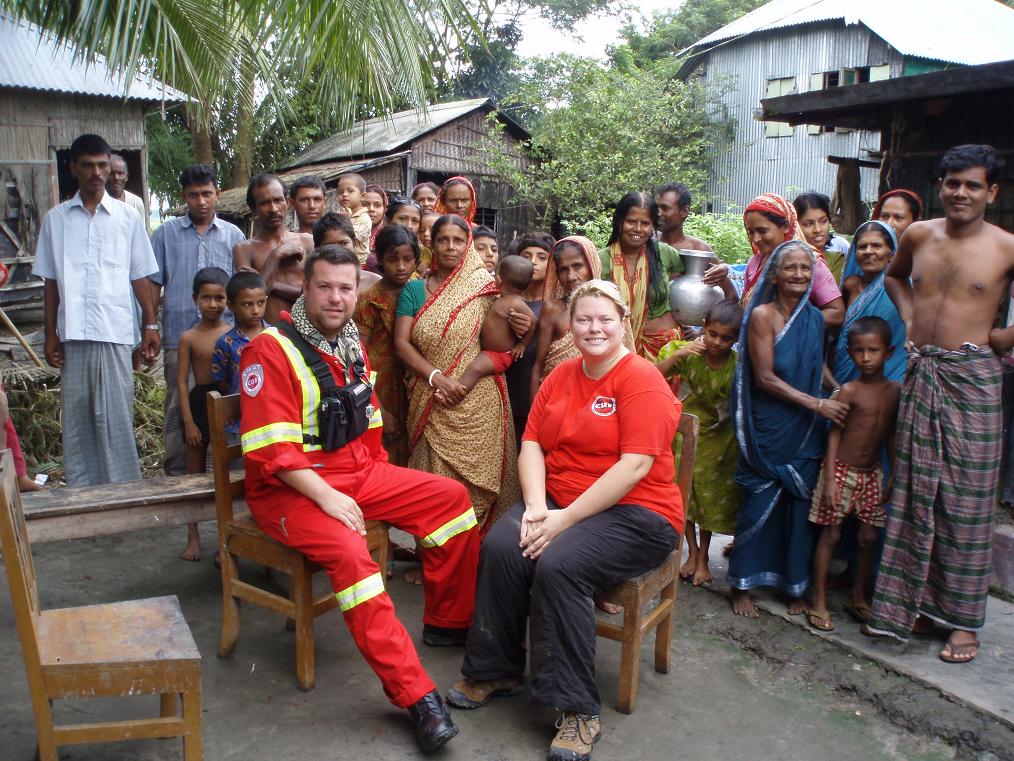
Partners
- Fazlullah Foundation
- BASSA
- USS
- icddr,b
Key Statistics
| Metric | Result | |
|---|---|---|
| Teams Deployed | 2-person rapid assessment arrived 18 Aug 2007; 4-member primary health care team deployed 27–28 Aug for ~14–21 days; a second rotation was being assembled to relieve Team 1. | |
| Operational Footprint | Community-based clinic established in Gopalganj; Gaibandha identified for additional outreach. Local partners included Fazlullah Foundation, BASSA, and USS. | |
| Clinical Focus | Primary care for acute watery diarrhoea/dehydration, gastrointestinal infections, skin/eye infections, and maternal/prenatal needs. | |
| Referral Context | In Dhaka, icddr,b handled ~1,780 patients per 24 hours at flood peak; overflow tents and supply pressure observed by assessment team. | |
| Humanitarian Context | Approximately 10.5–13 million people affected nationally during the 2007 floods, with around 615 deaths reported by late August; high WASH-related disease risk. | |
| Data Note | CMAT’s public posts do not list CMAT-only patient totals; this report presents verified team composition, locations, mission duration, and contextual caseload figures only. |