Hurricane Melissa
~15,000 People in emergency shelters
Executive Summary
Hurricane Melissa escalated from a forecasted major hurricane into one of the most severe regional disasters to affect the Caribbean in 2025. The system rapidly intensified to a catastrophic Category 5 storm and made a rare south-to-north landfall in western Jamaica on 28 October, with sustained winds of approximately 185 mph (300 km/h), before tracking into eastern Cuba on 29 October as a Category 3 hurricane. In Jamaica, the primary area of impact, the storm triggered island-wide flooding, landslides, and wind damage, prompting authorities to declare the entire island a disaster area. Roughly 15,000 people sought refuge in emergency shelters, more than 530,000 electricity customers lost power at peak, and national internet connectivity fell to an estimated 30–40% of normal capacity. Healthcare infrastructure sustained direct damage, and chronic disease management, trauma care, and water safety emerged as immediate health priorities. In eastern Cuba, large-scale pre-emptive evacuations moved more than 735,000 residents to safety, limiting casualties even as flooding, landslides, and utility disruptions isolated communities.
Crisis Context
Hurricane Melissa intensified from a Category 4 system on 26 October 2025 into a catastrophic Category 5 storm prior to landfall. It struck western Jamaica on 28 October before moving into eastern Cuba on 29 October as a Category 3 hurricane. Across both countries the storm produced widespread flooding, landslides, infrastructure damage, prolonged power outages, and significant disruption to health services and transportation networks.
Deployment Overview
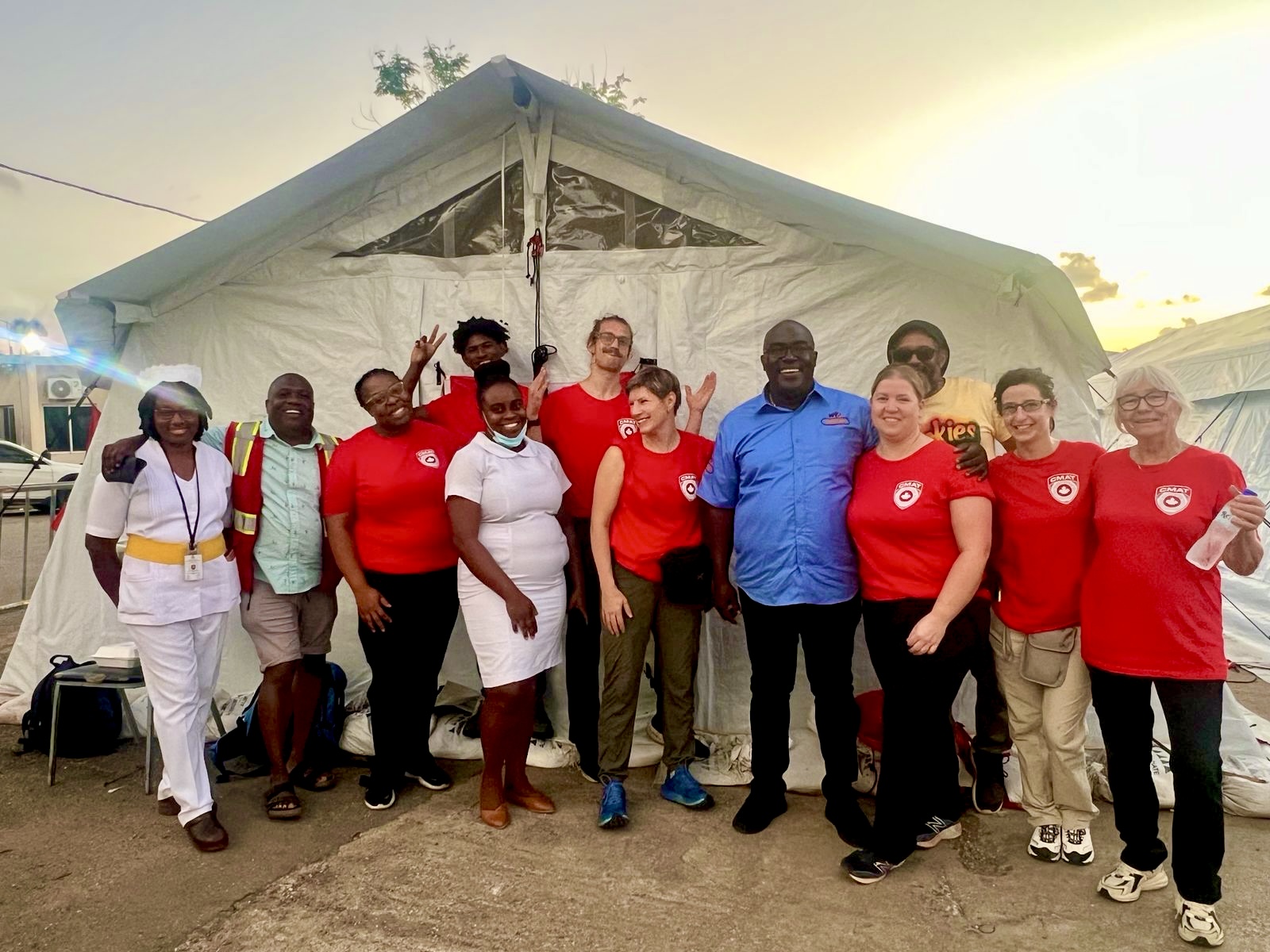
In collaboration with Burnaby Urban Search and Rescue, CMAT arrived within the first 72 hours to assist rescue and early medical operations. Coordinated by the Jamaican Ministry of Health and Wellness and the Pan American Health Organization (PAHO), the team established a field clinic adjacent to Cornwall Regional Hospital in Montego Bay to provide urgent primary care and help decompress the overwhelmed emergency department. CMAT clinicians treated patients with trauma, infections, chronic disease exacerbations, and other storm-related illnesses, while mobile teams supported affected rural communities.
Key Statistics
| Metric | Result | |
|---|---|---|
| People in emergency shelters | ~15,000 | |
| Fatalities (preliminary) | At least 3 | |
| Injuries (preliminary) | 13 | |
| Residents evacuated ahead of the storm | 735,000+ |